Let’s be real for a second. When you spent years in med school, residency, and fellowship, nobody pulled you aside and said, “Hey, you’re also going to need to understand SEO, run Facebook ads, and figure out why your Google listing shows the wrong phone number.” And yet… here we are.
Most independent doctors say some version of the same thing: “I know I need to do more online, but I don’t even know where to start.” And honestly? That makes total sense. You’re busy seeing patients, managing staff, and dealing with insurance headaches; the last thing you want to do is spend your weekend trying to decode Google Analytics. But ignoring your digital strategies isn’t really an option anymore. At MedicalSuite.ai, we help independent doctors build the kind of online presence that actually brings patients in, not just a website that sits there looking pretty. Not if you want to grow.
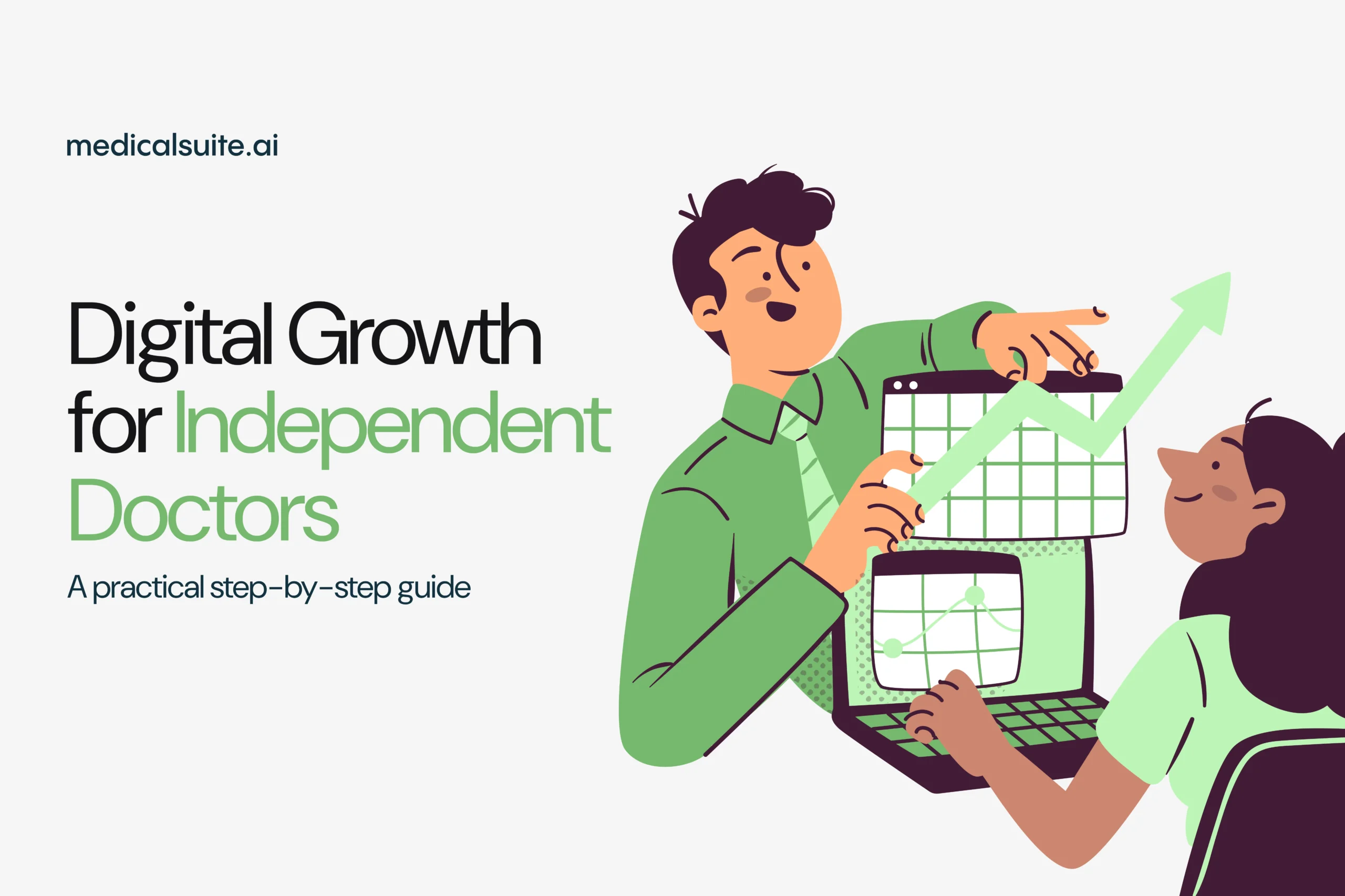
That’s exactly why we put this together. This isn’t a fluffy “just be on social media!” post. This is a real, step-by-step walkthrough of the digital strategies that actually move the needle for independent practices. We’ve seen what works (and what’s a total waste of time), so let’s get into it.
Step 1: Get Your Foundation Right. Your Website Is Your Front Door
Before you do anything else, before you run a single ad or post a single Instagram reel, your website needs to be solid. Like, actually solid. Not just “it exists and has your phone number” is solid. Your website is the anchor for every other digital strategy you’ll ever run. Everything points back to it.
Here’s the hard truth: a slow, outdated, or confusing website is actively costing you patients. People Google a doctor, land on a website that looks like it was built in 2009, and immediately hit the back button. That’s a real person who needed care and chose someone else.
Your website needs to do a few non-negotiable things: load fast (under 3 seconds), look good on a phone (because that’s how most people find you), make it stupid-easy to book an appointment or call you, and this is big: it needs to be HIPAA-compliant and ADA-accessible. Those aren’t optional. They’re legal requirements, and they also build trust with patients.
We know “ADA and HIPAA compliance” sounds like a scary technical nightmare, but it really just means your site handles patient information safely and is usable by people with disabilities. It’s the right thing to do, and it protects you legally. Win-win.
Step 2: Own Your Local Search Because ‘Near Me’ Is Everything
The single highest-intent thing a potential patient can do is Google “cardiologist near me” or “family doctor accepting new patients [your city].” These people are ready. They want to make an appointment. They’re not browsing, they’re deciding.
This is where local SEO comes in, and it’s one of the most powerful digital strategies you can invest in as an independent doctor. It’s not glamorous, but it works. And for independent practices with limited budgets, it’s often the highest-ROI digital strategy in the entire playbook.
Start with your Google Business Profile. Claim it, fill every single field, add real photos of your office and team (patients respond to seeing a human face), collect reviews consistently, and keep your hours updated. Sounds simple, right? You’d be shocked at how many practices have wrong phone numbers or outdated addresses on Google, and they have no idea they’re losing patients because of it.
From there, focus on your website content. Are you creating pages that answer the specific questions your patients are searching? “What is a DEXA scan?” “How do I know if I need to see a rheumatologist?” “Does my insurance cover preventive care?” These are real searches. Being the practice that answers them builds trust before someone even steps through your door.
Step 3: Paid Ads Done Right Fast Visibility Without Wasting Money
Okay, SEO is a long game. It’s worth it, but results take time. If you need new patients now, like this month, PPC (pay-per-click) ads are where you go. Specifically, Google Ads and sometimes Facebook/Instagram ads, depending on your specialty. Paid advertising is one of the most misunderstood digital strategies in healthcare, and that misunderstanding costs practices a lot of money.
Here’s where a lot of independent practices get burned: they either try to set up ads themselves (and hemorrhage money on clicks that don’t convert) or they hire some generic agency that has zero understanding of healthcare. The result is the same expensive clicks, no appointments.
The key to digital strategies with paid ads is specificity. You’re not trying to reach everyone; you’re trying to reach people in your zip codes who need your specific services and have insurance you accept. Targeting matters enormously. So does the landing page tthat hose ads send people to. A generic homepage doesn’t cut it. You need a focused page that matches what the ad promised.
Done right, PPC can deliver a genuinely strong return. We’ve seen practices fill their new patient pipeline within weeks of launching a well-targeted campaign. The flip side is that, done wrong, it’s just expensive. Which is why this really is an area where having someone in your corner who knows healthcare marketing pays for itself.
Step 4: Content Marketing: Yes, You Actually Need This
I know, I know. “Content marketing” sounds like something a startup would put on a pitch deck. But hear me out, because this is genuinely one of the most underused digital strategies for independent practices and one of the most sustainable ones, too.
Patients today research before they call. They want to understand their symptoms, their treatment options, and what to expect from a procedure. If your practice is the one producing clear, helpful, trustworthy content on those topics, you become the authority. People remember who helped them understand something scary. They call that person.
This doesn’t mean you need to be posting daily or filming elaborate videos. Even one good blog post a month, one short explainer video per quarter, and a consistent presence on the platform where your patients actually spend time, that adds up. Over a year, you’ve built a real library of trust-building content that supports every other digital strategy you’re running.
Video content specifically is having a moment right now. A 60-second video of you explaining what happens during a new patient visit, or busting a common myth about your specialty, does more for your credibility than a dozen stock-photo posts ever will. Patients want to see you. They want to know you’re a real person who actually cares.
Step 5: Email Marketing Your Most Underrated Tool
Here’s one that surprises people: email marketing consistently delivers one of the best returns of any digital channel. And for healthcare, it’s perfect. It’s also one of the few digital strategies where you’re not at the mercy of an algorithm; your message goes directly to your patient.
Your existing patients already trust you. They gave you their email address. Staying in touch with them with genuinely useful health tips, seasonal reminders (flu shots, annual wellness visits), practice updates, or even just a warm “we’re thinking about our patients” newsletter keeps your practice top of mind.
Think about it from the patient’s perspective. Life gets busy. They mean to schedule a follow-up but keep forgetting. A friendly email reminder is the nudge they needed. You just filled an appointment slot. That’s not pushy, that’s good care.
And for practices that are growing or adding new services? Email is the fastest way to let your existing patient base know. These are people who already chosen you. They’re your warmest audience.
Step 6: Reviews and Reputation Don’t Leave This to Chance
Online reviews are the word-of-mouth of the digital age. And unlike the old days when a happy patient might tell three friends, a glowing online review can be read by hundreds of people. Your reputation is one of the most visible parts of your overall digital strategy and one of the easiest to neglect.
The tricky part with healthcare is that HIPAA rules what you can and can’t say publicly about patients. You can’t respond to a negative review by discussing their care. But you can and should actively encourage satisfied patients to share their experience.
Build a simple system. At checkout, have a gentle ask: “If you had a good experience today, we’d really appreciate a Google review, as it helps other patients find us.” That’s it. Most patients who loved their visit are happy to do it; they just need the nudge. Over time, this compounds into a strong online reputation that your paid digital strategies can lean on.
Bringing It All Together
Here’s the thing about all of these digital strategies: they work best together. Your SEO brings people to your website. Your website converts them into leads. Your paid ads fill the gaps quickly. Your content builds trust over time. Your emails retain the patients you’ve earned. Your reviews back up everything.
It sounds like a lot, and honestly, if you’re trying to do all of this on top of running a practice, it is a lot. That’s not a failure on your part. That’s just the reality of modern healthcare marketing. Are the independent practices growing right now? Most of them have a partner handling this stuff so they can focus on what they actually love: taking care of patients.
That’s exactly what we do at MedicalSuite. We work exclusively with independent practices and small clinics across the US, and we build these digital strategies around your specific goals, your specialty, and your patients. No cookie-cutter packages. No agency that treats you like account number 247.
What We Do at MedicalSuite
Custom Website Design – Professionally designed websites built around your practice, your brand, and your patients, not a template someone else is also using.
ADA & HIPAA-Compliant Websites – Every site we build meets ADA accessibility standards and HIPAA compliance requirements, so you’re protected legally, and your patients trust you from the first click.
Digital Marketing – Full-funnel digital marketing strategy tailored to your specialty, your location, and your growth goals.
SEO & PPC Ads – Local SEO to own your search rankings, plus targeted pay-per-click campaigns that bring in new patients fast without wasting your budget.
Video Editing & Content Marketing – From short social videos to in-depth blog content, we create the materials that build your authority and keep patients engaged.
Email Marketing – Done-for-you email campaigns that keep your existing patients coming back, fill your schedule, and introduce new services to people who already trust you.
Your Patients Are Searching. Are They Finding You?
Every day you wait is another day a competing practice is filling their schedule with patients who should be yours.
We get it, you’re a doctor, not a marketer. You shouldn’t have to be both.
Book Your Free Strategy Call at Medicalsuite.ai.Let us handle your digital presence so you can focus on what you do best: taking care of people.