Let’s be honest for a second, healthcare marketing doesn’t usually feel very… human. It’s either painfully generic (“We care about your health!”), awkwardly salesy (“Book now, limited slots!”), Or so clinical it reads like a legal document. And as a clinic owner or practice manager, you probably already know this because you’ve seen it. Maybe you’ve even paid for it.
At MedicalSuite, we see this every single day. Clinics come to us frustrated because their healthcare marketing technically “works,” but it doesn’t connect. Patients visit the site, read a page, maybe even like what they see, and then disappear. No booking, no follow-up, no relationship. That gap between attention and action is exactly where AI-driven personalization changes everything.
That’s what this post is really about: how AI is helping clinics stop sounding like brands and start sounding like people again. Not creepy tracking. Not manipulation. Just smarter, more relevant communication that feels timely, respectful, and actually useful to patients.
Why personalization matters more in healthcare than anywhere else
People don’t shop for healthcare the way they shop for shoes.
No one is casually browsing “top 10 colonoscopy providers” for fun.
They’re usually:
- Anxious
- Confused
- In pain
- Embarrassed
- Or caring for someone who is
Which means generic messaging doesn’t just feel lazy, it feels dismissive.
When someone searches “GI specialist near me” or “why does my stomach hurt after eating,” they don’t want a brand voice. They want clarity, reassurance, and someone to get what they’re dealing with.
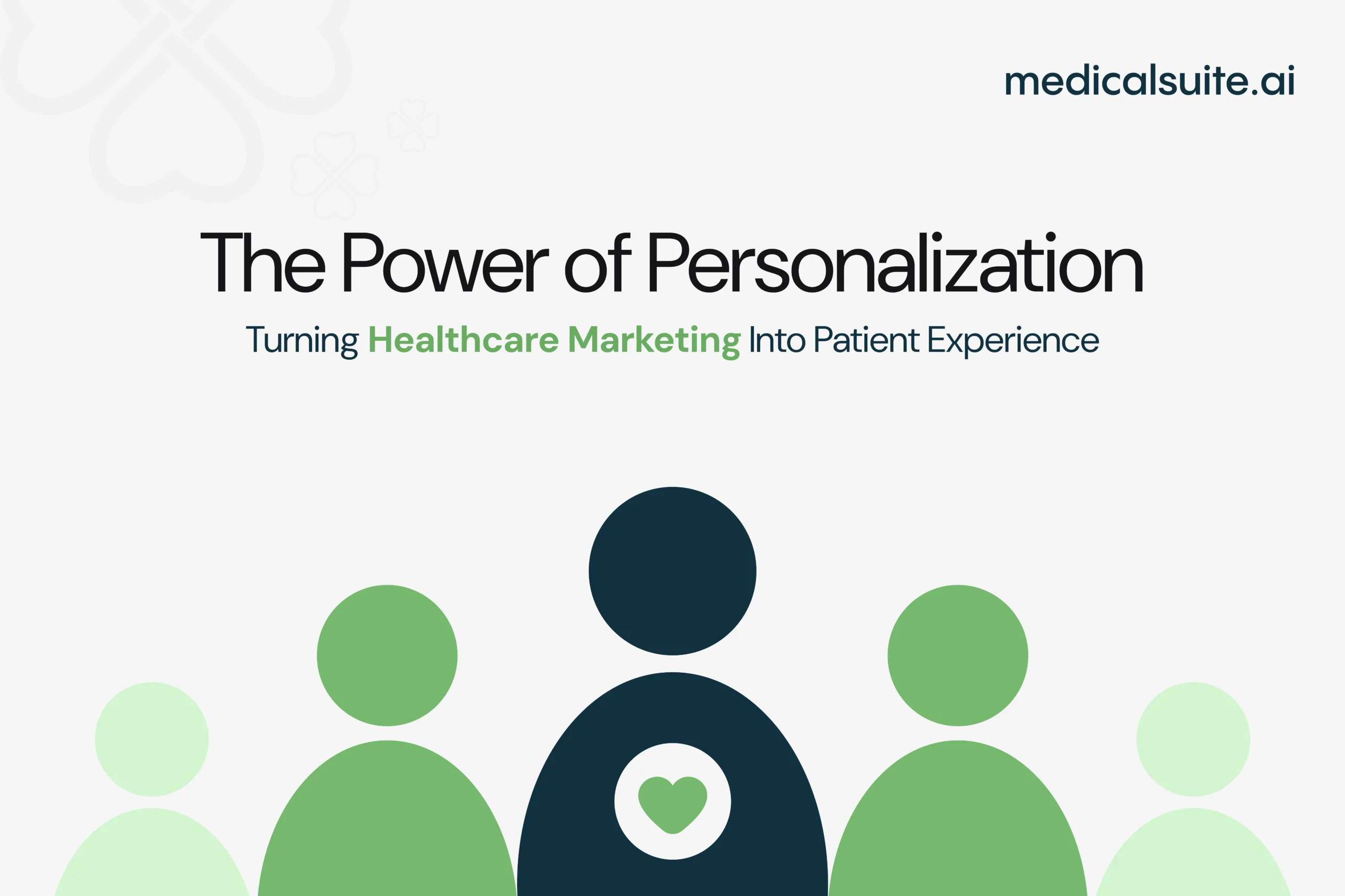
That’s why personalization isn’t just a conversion trick in healthcare marketing. It’s part of the patientexperience.
What AI personalization actually looks like
Let’s kill a myth first.
AI in healthcare marketing is not a robot writing emails while laughing maniacally.
It’s much more boring and much more useful than that.
Here’s what it really does:
- Notices patterns humans can’t scale
- Connects data points you don’t have time to connect
- Reacts in real time instead of quarterly reports
That’s it.
For example:
1. Personalized content based on patient interest
Let’s say someone downloads a guide from your site about acid reflux.
AI can:
- Tag that interests
- Stop showing them unrelated or generic ads
- Start showing them GI-related content
- Trigger follow-up emails about relevant services
Not because it’s manipulative, but because it’s respectful of their time.
That’s better healthcare marketing. Period.
2. Smarter follow-ups
Instead of blasting every patient with the same reminder:
“We offer many services. Call us.”
AI lets you say:
“Hey, Sarah, you visited our dermatology page last week. If that mole is still worrying you, we have openings on Tuesday.”
That doesn’t feel like marketing. That feels like someone paying attention.
3. Better timing
AI learns when your patients open emails, click links, or book appointments, and sends messages when they’re most likely to respond.
Not at 3 am.
Not on Sunday dinner.
Not during work hours if they never engage then.
That’s how personalization improves healthcare marketing without being annoying.
What personalization changes are behind the scenes
Personalization quietly improves how your entire marketing system works.
Instead of guessing what might resonate, you respond to real behavior. Instead of treating every visitor the same, your communication adjusts based on what people care about, when they care, and how they engage.
That means your website feels more relevant, your follow-ups feel more timely, and your ads feel less intrusive because they align with actual patient intent.
From the patient’s perspective, nothing feels automated. It just feels smoother and more helpful.
From the clinic’s perspective, it means less wasted effort and more meaningful engagement with the right patients.
That’s the value of personalization in healthcare marketing: not louder messaging, but better alignment between what you offer and what people need.
Where clinics usually get this wrong
Let us be blunt.
Most clinics mess this up in three ways:
1. They over-automate
Everything becomes robotic. Patients feel processed, not cared for.
That kills trust.
AI should support empathy, not replace it.
2. They under-use their data
You already have patient behavior data.
Website analytics.
Appointment history.
Email engagement.
Most clinics ignore it.
That’s like owning a gym and never looking at the equipment.
3. They think personalization is “just email.”
It’s not.
It’s:
- Website content
- Ads
- Follow-ups
- Patient education
- Timing
- Language tone
- Device behavior
- Even accessibility
True personalization touches the entire healthcare marketing ecosystem.
Why does this matter for your clinic specifically
You’re not competing with “healthcare” in general.
You’re competing with:
- The clinic down the street
- The urgent care with better Google reviews
- The telehealth app with aggressive ads
Your edge isn’t technology. It’s trust.
And personalization builds trust faster than anything else in healthcare marketing.
It shows:
- You’re paying attention
- You respect patients’ time
- You understand their situation
- You’re not just broadcasting, you’re listening
That’s what turns visitors into patients.
And patients become loyal patients.
Quick reality check
If your healthcare marketing currently looks like this:
- Same message to everyone
- Same homepage for every visitor
- Same email blast every month
- Same call-to-action regardless of intent
You’re leaving growth on the table.
Not because you’re bad at marketing, but because the tools have evolved and most clinics haven’t caught up yet.
That’s normal.
But it’s fixable.
How MedicalSuite helps clinics do this without breaking things
At MedicalSuite, we don’t drop random tech on clinics and wish them luck.
We integrate AI personalization into healthcare marketing in a way that fits:
- Your operational workflows
- Regulatory and compliance requirements
- Available staff capacity
- Your patient demographics and behavior
And we do it without turning your brand into a robot.
We help clinics with:
- Digital marketing strategy
- PPC advertising
- SEO
- Content marketing
- Email marketing
- HIPAA-compliant systems
- ADA-compliant custom websites
- Data automation
We’ve helped clinics like Greenleaf Medical Associates and GI Partners of Illinois grow smarter, not louder, and build marketing that actually feels human.
The honest takeaway
AI isn’t here to replace relationships.
It’s here to scale attentiveness.
And that’s the future of healthcare marketing, not louder messaging, not more content, not more ads…
Just better relevance.
More care.
Less noise.
More understanding.
Less guessing.
And honestly? Patients deserve that.
Ready to make your healthcare marketing feel human again?
Let’s stop blasting messages into the void and start having real conversations with your patients.
Book a free strategy call with MedicalSuite, and let’s turn your marketing into something people actually want to hear from.