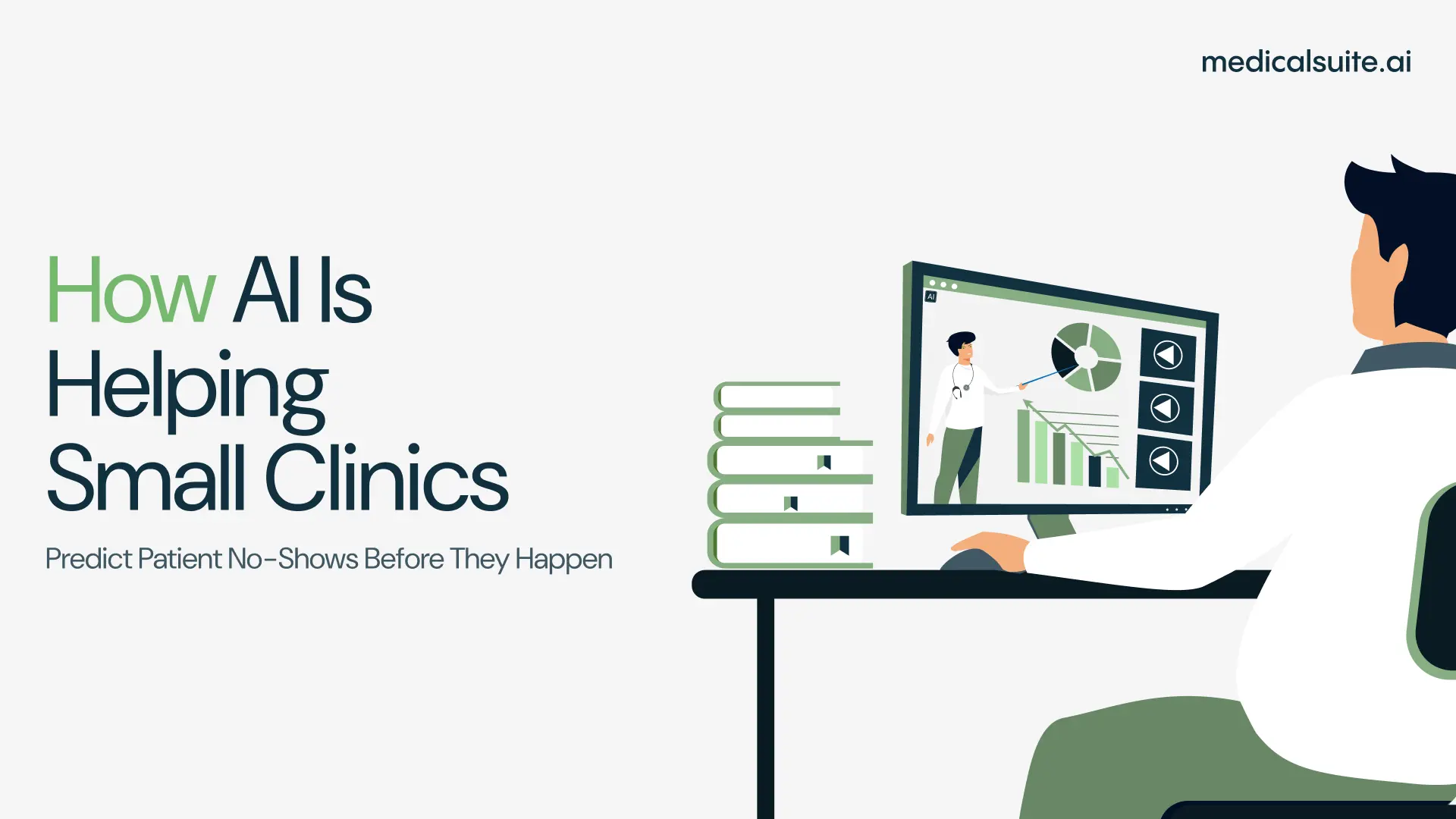
If you’ve ever blocked off a 30-minute appointment slot, prepped your notes, had your staff ready, and then watched that patient simply not show up, you already know the specific kind of frustration we’re talking about. AI is changing how clinics handle this problem, and it’s about time. It’s not dramatic. It’s not loud. It just quietly chips away at your day, your revenue, and, honestly, your morale.
And the worst part? It keeps happening. Over and over again.
The average no-show rate for small clinics sits somewhere between 20% and 30%. That’s not a rounding error. That’s real money walking out the door before it ever walked in. For independent physicians and smaller practices that don’t have the luxury of a packed schedule absorbing the loss, no-shows hit differently.
So what do most clinics do? They send a reminder text the day before. Maybe an email. And then they hope.
That’s not a strategy. That’s wishful thinking with a send button.
This Is Where AI Actually Starts Earning Its Keep
We know AI gets thrown around constantly right now. It’s on every webinar, every vendor pitch, every newsletter you didn’t ask to be subscribed to. But here’s the thing: when it comes to predicting patient no-shows, AI isn’t hype. It’s genuinely useful, and small clinics are starting to see why.
Here’s what’s actually happening under the hood. AI tools trained on patient data can look at patterns you’d never have the time to notice manually. Things like:
- How many times has this patient rescheduled before?
- What time of day did they book, and does that historically lead to lower show rates?
- Did they confirm their appointment, and how long after the reminder?
- What’s the weather forecast looking like for their appointment day? (Yes, really.)
- Is this a follow-up visit or a first-time appointment, because those have very different no-show behaviors.
None of these signals alone tells you much. But together, with AI processing them across hundreds or thousands of past appointments, you start to get something valuable: a prediction score. A heads-up. An early warning system that says, “Hey, this one might not show.”
A Real Example That Puts It in Perspective
Let’s say you’re running a GI clinic in a mid-size city. Your Wednesday mornings are always your busiest block. But you’ve noticed, sort of vaguely in the back of your mind, that you tend to get hit with no-shows right around 10 a.m. You’ve never really tracked why. You don’t have time to track why.
An AI system does. It notices that patients who book Wednesday morning slots more than three weeks in advance and don’t confirm within 48 hours of their appointment cancel or ghost at nearly twice the rate. So now, instead of sending everyone the same generic reminder the day before, your system flags those specific patients and triggers an earlier, more personalized outreach. Maybe even a phone call from a human staff member, not just an automated text.
That’s not magic. That’s pattern recognition working in your favor instead of against you.
The Emotional Side of This (Because It’s Real)
Here’s something that doesn’t get talked about enough in healthcare tech conversations: no-shows don’t just hurt your revenue. They throw off your whole rhythm.
Your staff has prepped. Your physician has mentally shifted gears. You’ve turned away a walk-in patient or two because the schedule looked full. And then nothing. A gap. A quiet room that was supposed to be occupied.
There’s a real human cost to that inefficiency, and it builds up. It leads to burnout. It leads to staff frustration. It leads to physicians wondering whether running an independent practice is even worth it anymore.
AI–powered no-show prediction doesn’t fix everything. But reducing your no-show rate even by 10% to 15% can meaningfully change the texture of your workdays. Fewer scrambles. More predictable revenue. Less time spent chasing patients who were never going to show anyway.
“But We’re a Small Clinic. Is This Even for Us?”
This is the question we hear the most, and honestly, it’s a fair one. A lot of AI tools in healthcare feel like they were built for large hospital systems with IT departments and seven-figure tech budgets.
But that’s changing. Fast.
There are now lightweight, integration-friendly AI solutions designed specifically for smaller practices. They don’t require you to overhaul your entire EHR. They don’t need a dedicated data scientist on staff. Many of them plug into what you’re already using and start learning from your existing appointment data almost immediately.
The barrier to entry is lower than you think. And the return in time, in revenue, in staff sanity is higher than most clinic owners expect.
What Good AI Implementation Actually Looks Like
We want to be honest here because many vendors won’t be: AI prediction tools aren’t a one-click fix. They need time to learn your specific patient population. They work better with more data, which means a clinic that’s been operating for five years will see stronger predictions faster than a practice that just opened.
But the learning curve is worth it.
The clinics that are seeing real results aren’t just deploying AI and walking away. They’re pairing the technology with smart follow-up workflows. When a patient gets flagged as a high no-show risk, someone actually does something about it: a personalized reminder, an earlier confirmation request, maybe a brief call. The AI identifies the problem. The humans solve it.
That combination is where the real improvement happens.
You Didn’t Go Into Medicine to Chase Down Empty Appointment Slots
You went into this because you wanted to help people. That’s it. That’s the whole point.
Every no-show is a patient who didn’t get the care they needed and a slot that could’ve gone to someone ready and waiting. Solving that problem isn’t just good for your bottom line; it’s actually better for your patients, too.
AI is making that solution more accessible, more affordable, and more practical for small clinics than it’s ever been. And honestly? We think every independent physician and practice owner deserves to have that kind of intelligence working in their corner.
This Is Exactly What We Help Clinics With at MedicalSuite.ai
At MedicalSuite.ai, we work exclusively with small clinics, independent physicians, and growing practices, and we understand the specific pressures you’re navigating every single day.
Our services are built around helping you grow smarter, not just louder:
- Growth Consultation: We help you identify exactly where your practice is leaking opportunity and build a roadmap to fix it.
- SEO: So patients who need your services actually find you when they search.
- PPC (Pay-Per-Click Advertising): Targeted campaigns that bring the right patients to your door without blowing your budget.
- Email Marketing: Staying top of mind with your patients between visits, in a way that feels personal, not spammy.
- Custom Websites: Built for healthcare, designed for conversion, and actually easy for your team to manage.
- Video Editing & Content Marketing: Your expertise, packaged into content that educates, builds trust, and grows your practice online.
We’re not a one-size-fits-all agency. We’re the team in your corner.
Your Schedule Should Work for You, Not Against You.
Your schedule should be the last thing stressing you out at the end of a long clinic day. Let’s change that.
Book a consultation with MedicalSuite.ai today. We’ll help you build a practice that runs smarter, fills faster, and grows without the guesswork.