Something shifted in healthcare over the last 18 months. If you’ve been running a clinic, you’ve probably felt it, even if you haven’t been able to put a name to it. The conversation around AI in healthcare moved fast. Like, really fast. One minute, it was something people mentioned at conferences. The next was showing up in your EHR, your billing software, and your inbox every single day.
And now in 2026, it’s not a “coming soon” thing anymore. It’s already in the room.
But here’s what doesn’t get talked about enough. Not all AI in healthcare is built the same. Not even close. There’s a real architectural split happening underneath all the noise, and it’s quietly determining which clinics come out ahead and which ones spend the next few years playing catch-up.
The Market Just Split Into Three Pieces
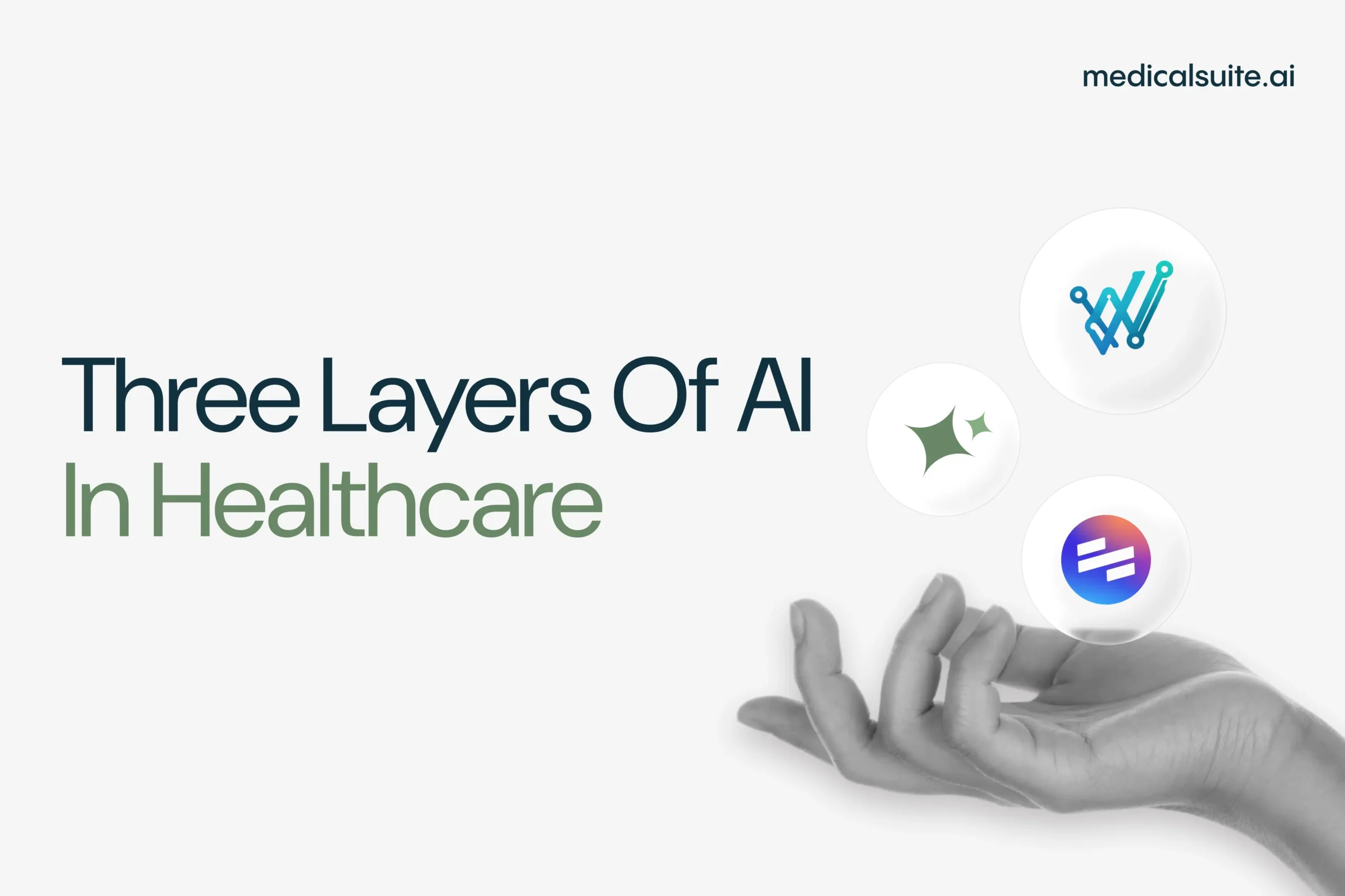
Think of AI in healthcare like a layered cake. The top layer is the one everyone talks about. The bottom layers are the ones that actually hold everything together.
Right now, the market has split into three distinct layers. Each one does something different. Each one has a different business model. And each one has a very different future.
Layer 1: The AI Scribe is useful and wildly overcrowded
You’ve definitely heard of this one. AI scribes listen to your patient encounter and automatically draft a clinical note. Players like Nuance DAX, Abridge, Suki, and Freed all live here. And yes, they genuinely work. Mass General Brigham saw a 21.2% reduction in burnout prevalence after just 84 days of use. The data backs it up.
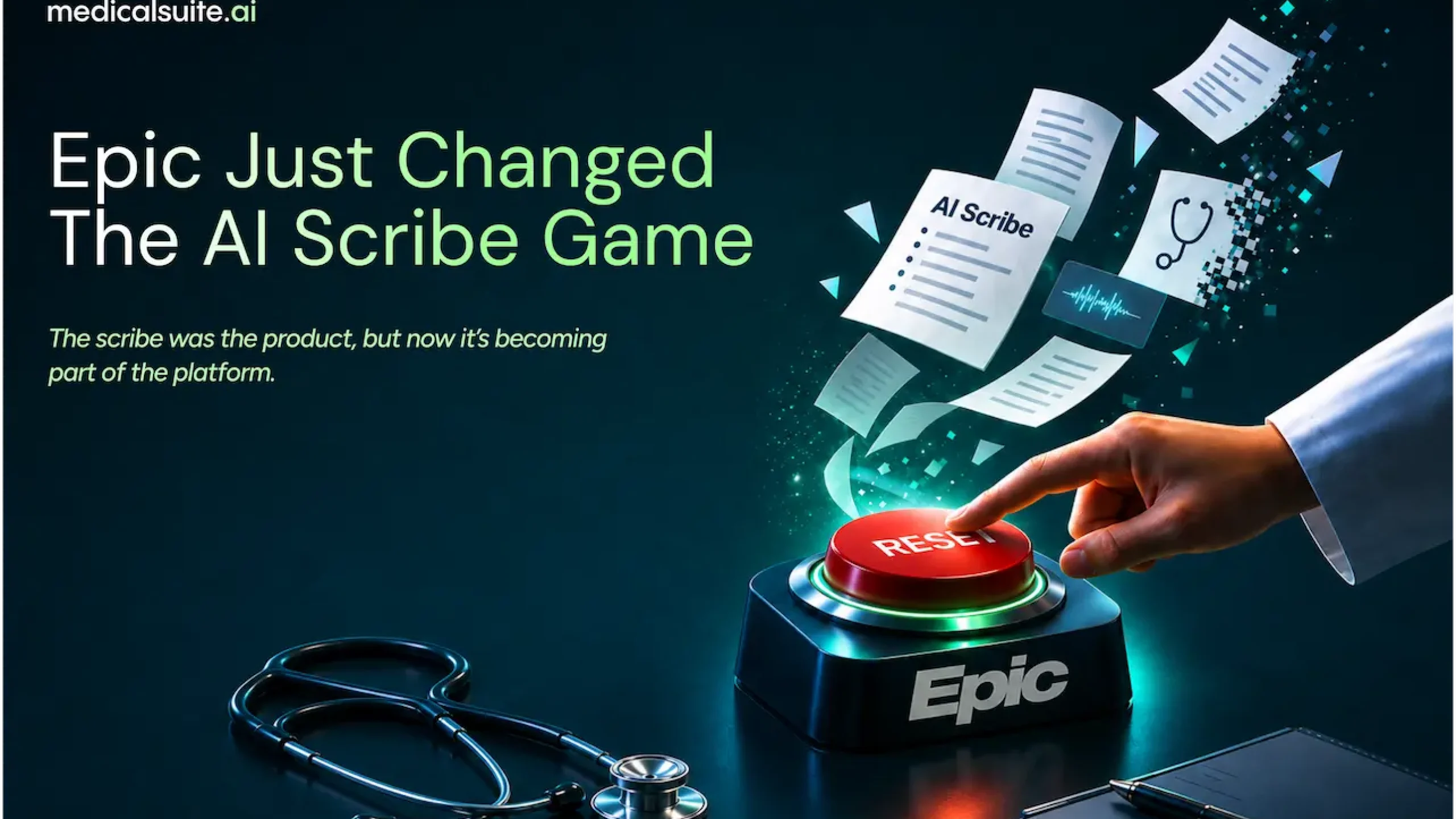
But here’s the uncomfortable truth: it’s getting commoditized fast. Over 100 funded AI scribe companies are competing for the same budgets right now. And then the big players showed up. Epic launched native AI Charting in February 2026, inside the EHR that 42% of US acute care hospitals already use. Athenahealth bundled its own scribe free. Doximity gives one away to physicians.
Free. As in, zero dollars.
What started as a category is quickly becoming just another feature. If you’re paying a premium for a standalone AI scribe right now, that’s a budget conversation worth having soon.
Layer 2: Workflow Intelligence, Your Revenue Cycle’s New Best Friend
Layer 2 is where the AI in healthcare conversation gets genuinely interesting for clinic operations. This isn’t just note-writing anymore. This is AI that takes the clinical conversation and converts it into downstream action coding, billing, referrals, prior auth, and quality measures.
Think about how much time your front desk and billing team spend on prior authorizations alone. Or how often a diagnosis goes underdocumented in a note, which means it doesn’t get coded, which means you don’t get paid for the work you actually did. Layer 2 AI tackles exactly that.
Health systems deploying ambient AI with downstream coding integration have reported double-digit increases in documented diagnoses per encounter and meaningful uplifts in physician work RVUs. At scale, the revenue uplift per encounter more than funds the technology. That’s not a pitch, that’s published data.
The stickiness here is real. Multi-year enterprise contracts, expansion across modules, and switching costs once billing logic is wired in. This is the layer that’s fighting a different battle, not against commoditization, but against EHR vendors and payer-owned RCM platforms trying to own the same territory.
Layer 3: Clinical Cognition Infrastructure; The One Almost Nobody’s Talking About
And then there’s Layer 3. And honestly, this is the one worth paying attention to.
This isn’t AI in healthcare that quietly takes notes after the fact. This is AI operating inside the decision itself, real-time guidance during encounters, pattern recognition across live conversations, and agentic workflows where every action is validated against clinical protocols before it fires. Every decision logged. Every step is accountable.
Think of it like cloud computing a decade ago. Nobody cared about orchestration and observability until it turned out that the invisible infrastructure layer was worth more than the apps sitting on top of it. Healthcare AI is heading the same way. And the regulatory pressure is already here. The FDA’s January 2026 guidance confirmed that AI products directly influencing clinical judgment will likely require FDA review or clearance. The governance layer isn’t optional anymore. It’s the product.
McKinsey puts it plainly. Around $265 billion in US administrative savings is sitting locked behind trust and governance barriers in healthcare. The bottleneck isn’t how smart the AI is. It’s whether anyone can trust it enough to actually deploy it.
That’s what Layer 3 solves.
Why Should a Clinic Owner Care About Any of This?
Fair question. You’re running a clinic, not a venture fund. You’re not trying to pick winners in a market structure analysis. You’re trying to reduce your admin burden, keep your staff sane, see more patients without burning out, and actually get paid for the care you provide.
Here’s why this matters practically:
The tools you choose today have different shelf lives: A standalone AI scribe you pay a premium for might be bundled free into your EHR within 12 months. That’s not hypothetical, it’s already happening. Knowing which layer a tool sits in helps you make smarter procurement decisions.
Your revenue cycle is already affected by AI, whether you know it or not: Payers are using AI to process and deny claims faster than ever. If you’re not using AI in healthcare on the coding and documentation side, you’re fighting a one-sided battle.
Compliance isn’t going away: HIPAA, ADA, and now increasingly AI-specific regulatory frameworks mean that the tools you adopt need to be accountable. The governance layer isn’t a luxury for large health systems. It’s becoming table stakes for anyone deploying AI in a clinical setting.
The clinics that win the next five years will be the ones that understand AI as infrastructure, not just a feature: The ones that treat AI in healthcare as a one-and-done tool purchase are going to keep re-purchasing, re-training staff, and reacting. The ones that build a thoughtful digital foundation now are going to compound on it.
What This Means for Your Clinic Right Now
We’re not going to tell you to go buy a specific platform or wait for Layer 3 to materialize before you make any moves. That’s not useful advice for a small clinic trying to operate today.
What we will say is this: the smartest thing you can do right now is get your digital foundation solid. That means your website is HIPAA and ADA compliant. Your SEO is actually working, bringing patients through the door instead of just sitting there looking nice. Your Google Ads aren’t burning budget on the wrong keywords. Your content is building trust with the patients searching for your services.
Because here’s the thing about AI in healthcare that the market analysis pieces don’t usually say out loud. The clinics that are going to benefit most from AI tools are the ones that already have clean operations underneath. AI amplifies what’s already there. If your patient acquisition is broken, AI won’t fix it. If your billing documentation is sloppy, AI won’t magically clean it up without first having solid systems to connect to.
Get the foundation right. Then layer in the tools.
How MedicalSuite.ai Helps Clinics Navigate This
This is exactly the kind of stuff we work through with clinic owners every day. We’re a growth consultancy and digital marketing agency built specifically for small clinics in the US, and we’ve seen firsthand how much easier it is to adopt new technology when your digital infrastructure is already solid.
Here’s what we offer:
Growth Consultation: We look at your clinic’s full growth picture: patient acquisition, retention, revenue gaps, and opportunities. We help you make decisions, including technology decisions, that actually make sense for your size and specialty.
SEO & AI Optimization: Your clinic needs to show up when patients search. We handle the technical and content SEO that gets you there, plus AI-optimized content strategies that keep you relevant as search behavior evolves.
Custom Websites: Not templates. Actual custom-built websites designed for clinic conversion, built around your specialty and your patients.
HIPA A & ADA Compliant Websites: Because compliance isn’t optional, and neither is accessibility. Every site we build meets the standards that protect your patients and your practice.
Content Marketing & Video Editing: From SEO blogs to educational videos, we build the content library that establishes your clinic as the trusted authority in your area.
PPC Ads (Google & Meta): We run paid search and social campaigns that bring in the right patients, not just clicks. Every dollar tracked, every campaign optimized.
Email Marketing: Patient retention starts with communication. We build and manage email campaigns that keep your patients engaged, informed, and coming back.
Your Clinic Deserves to Be Found, Trusted, and Fully Booked.
The AI in healthcare wave isn’t coming. It’s here. And the clinics writing the next chapter aren’t the biggest ones, they’re the most prepared ones. If your digital foundation isn’t solid, no amount of AI will save your patient pipeline.
Book a consultation with Medicalsuite.ai today, and let’s build a clinic that patients can actually find, trust, and choose.