Picture this: a family doctor finishes her last appointment at 5:30 PM. The patient leaves feeling heard, cared for, maybe even a little hopeful. And then the doctor sits back down, not to grab her keys and head home, but to spend the next two hours typing notes. That’s not a rare edge case. That’s Tuesday. And for most physicians in the U.S., that picture is still very much their reality, one that AI scribes are finally starting to change.
Documentation eats up somewhere between two and three hours of their day. Every. Single. Day. We’re talking about people who went to school for a decade to help human beings, now spending a significant chunk of their working life staring at an EHR screen, and this is exactly the problem AI scribes were built to solve. Trying to remember exactly how a patient described their knee pain at 2:14 PM shouldn’t be anyone’s full-time job.
It’s exhausting. And honestly? It’s a little heartbreaking.
That’s where AI scribes come in, and if you haven’t heard much about them yet, you’re about to.
So What Exactly Are AI Scribes?
AI scribes are tools that listen to a doctor-patient conversation in real time and automatically generate clinical notes. No typing, no dictating, no frantic scribbling. The AI processes the conversation, pulls out the relevant clinical information, and drafts a note, structured, accurate, and ready for the physician to review.
Think of it like having an incredibly focused, never-tired assistant sitting in on every appointment. One that doesn’t need coffee breaks or ask for PTO.
Companies like Nuance DAX, Abridge, and Suki have been quietly rolling this out across clinics and health systems, and the early results are, not to be dramatic, kind of life-changing for the physicians using them.
The Numbers Don’t Lie (But They Do Surprise)
Here’s something that should stop you mid-scroll: physicians spend nearly 37% of their time on administrative tasks, with documentation being the biggest offender. That’s data from multiple studies, including research published in the Annals of Internal Medicine.
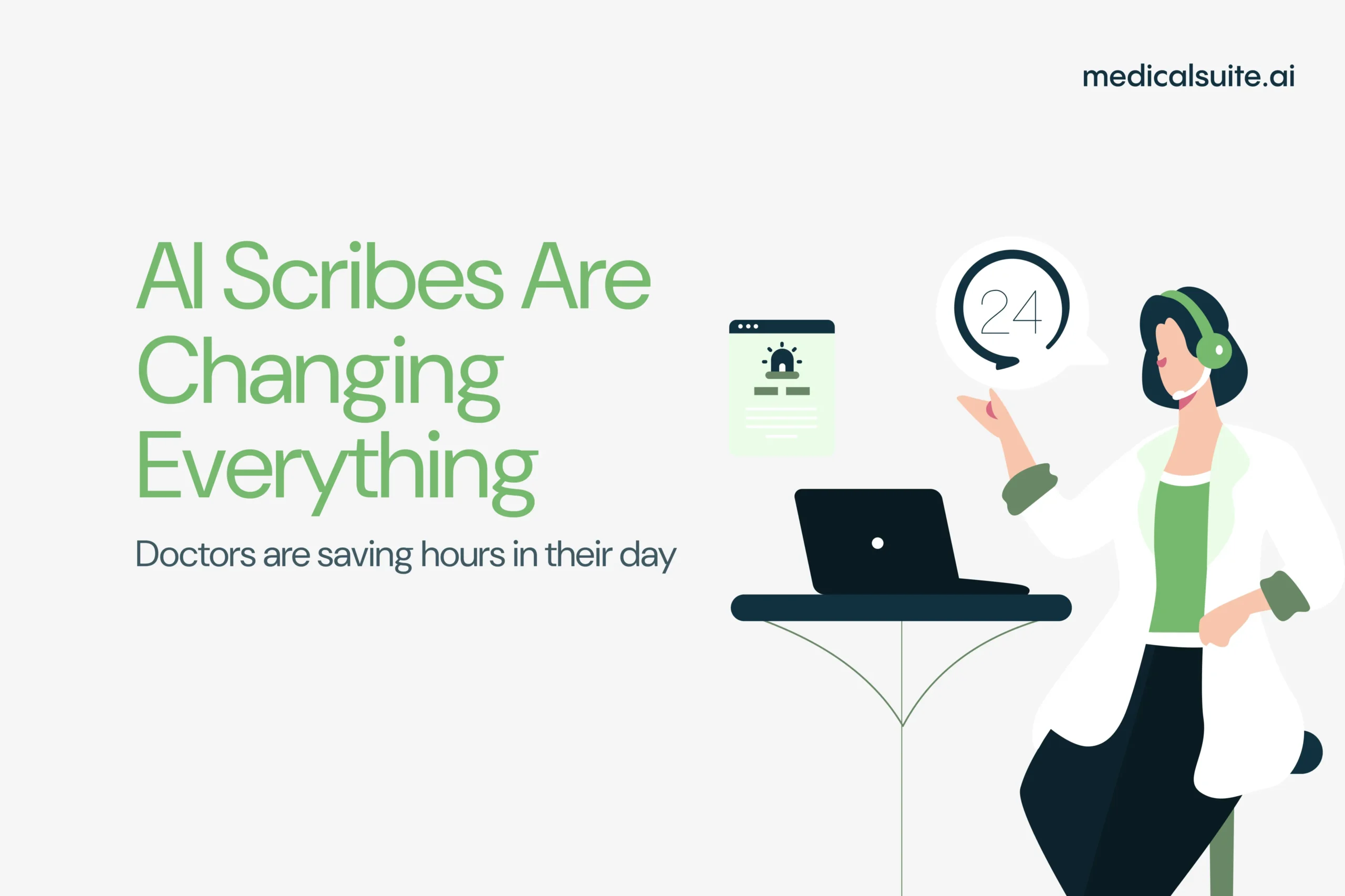
Now flip that. Clinics using AI scribes are reporting that documentation time has dropped by 50 to 70%. Some physicians say they’re saving two full hours a day.
Two hours. Daily.
That’s ten hours a week. Over a year, that’s weeks handed back to the physician, time that can go toward seeing more patients, spending actual quality time with the ones they have, or simply leaving the office before dark for once.
One internist using Nuance DAX put it plainly: she said she finally feels like a doctor again, not a data entry clerk. That line stuck with us.
What This Actually Looks Like in a Real Clinic
Let’s say Dr. Patel runs a small internal medicine practice in Ohio. He’s got a busy schedule, 20 to 25 patients a day, and his evenings used to be swallowed by charts. His front desk staff would occasionally find him still at his desk at 7 PM, long after the last patient had left.
After integrating an AI scribe into his workflow, something shifted. The notes were being drafted during the appointment. By the time the patient walked out, the documentation was mostly done. Dr. Patel spent a few minutes reviewing and approving, and then he was actually done.
He started leaving by 5:45 PM. He coached his kids’ soccer team on Thursdays. Small things, but isn’t that the point?
This isn’t fantasy. This is what AI scribes are doing for independent physicians and small practice owners right now.
But Wait, Is It Accurate?
Fair question. The biggest concern most clinicians have when they first hear about AI scribes is accuracy. What if it mishears something? What if it misses a key detail? What if it just… gets it wrong?
Valid. Completely valid.
Here’s what the data and early adopters say: most AI scribe platforms are trained on millions of clinical conversations. They understand medical terminology, context, and the structure of clinical notes at a level that’s genuinely impressive. And importantly, the physician always reviews before anything goes into the chart. It’s not autopilot. It’s more like a very competent co-pilot.
Are there occasional errors? Yes. A clunky phrase here, a missed nuance there. But physicians report that editing an AI-scribe-drafted note is significantly faster than writing one from scratch, even when corrections are needed.
The learning curve is real but short. Most physicians report feeling comfortable within a week or two.
The Burnout Connection Nobody Talks About Enough
Physician burnout is at crisis levels in the U.S. According to the American Medical Association, more than half of U.S. physicians report symptoms of burnout, and administrative burden is consistently listed as one of the top drivers.
This matters for small clinics especially, because when a physician burns out, the whole practice feels it. Patient care suffers. Staff morale dips. Revenue takes a hit. It’s a domino effect that starts with too many hours typing notes and ends somewhere nobody wants to be.
AI scribes aren’t going to solve burnout entirely, let’s be clear about that. But removing two hours of documentation per day? That’s not a small thing. That’s giving physicians their evenings back. Their energy back. Maybe even their love of medicine is back.
That’s worth paying attention to.
What Small Clinics Should Know Before Jumping In
If you’re a clinic owner reading this and thinking, “Okay, I want this,” great instinct. But here’s what to keep in mind before you commit:
- HIPAA compliance is non-negotiable. Any AI scribe tool you use needs to be fully HIPAA-compliant and have a signed Business Associate Agreement (BAA) in place. Don’t skip this step. Ever.
- Integration with your EHR matters. The best AI scribe solutions sync directly with your existing EHR system. Friction in the workflow kills adoption, so make sure compatibility is confirmed before you sign anything.
- Buy-in from your physicians is everything. The technology only works if the people using it actually use it. A little training and a clear explanation of what the tool does (and doesn’t do) go a long way.
- Start with a pilot. Most platforms offer trial periods. Use them. Let one or two physicians test it out, gather feedback, and then expand.
The good news? Most small clinics can get up and running without a massive IT overhaul. These tools are built to integrate, not complicate.
The Bigger Picture
We’re at a moment in medicine where technology is finally starting to solve the right problems. Not just the flashy ones, the human ones. The “I went into medicine to help people, not fill out forms” ones.
AI scribes aren’t replacing doctors. They’re protecting them. They’re creating space for the actual practice of medicine, the listening, the diagnosing, the reassuring, to take center stage again.
And for small clinics trying to compete, retain good physicians, and actually grow? That kind of tool isn’t a luxury. It’s quickly becoming a necessity.
How MedicalSuite Helps Clinics Like Yours Grow
At MedicalSuite, we work with small clinics across the U.S. to help them grow smarter, not harder. Here’s what we bring to the table:
- Growth Consultation: We dig into your practice’s numbers, patient flow, and market position to build a strategy that actually moves the needle.
- SEO & AI Optimization: We make sure your clinic shows up where patients search, including Google’s AI Overviews, which are reshaping how practices are discovered.
- Custom Websites: Built for your brand, your patients, and your goals. No templates, no cookie-cutter layouts.
- HIPAA & ADA Compliant Websites: Your online presence needs to protect your patients and your practice. We build compliance in from day one.
- Content Marketing & Video Editing: From blog posts to patient-facing videos, we create content that builds trust and drives appointments.
- PPC Ads: Google and Meta advertising managed by people who understand healthcare, which means no wasted spend and no compliance headaches.
- Email Marketing: Stay top of mind with your patients between visits, re-engage lapsed ones, and build loyalty that lasts.
Ready to Reclaim Your Time and Your Growth?
Your physicians deserve their evenings back. Your clinic deserves a strategy that works. And your patients deserve a doctor who isn’t running on empty, and that starts with smarter tools like AI scribes.
Book Your Growth Consultation With Medicalsuite Today. And let’s build that together.