Patients used to Google their symptoms, scroll through a few links, maybe land on WebMD, and eventually find their way to a clinic website. That whole journey? It’s changing fast. And if you run a small clinic, the answer engine shift is something you genuinely can’t afford to sleep on.
Think about it. Someone wakes up at 2 am with that familiar stomach pain, grabs their phone, and asks ChatGPT, “What kind of doctor should I see for chronic bloating?” They’re not opening ten tabs. They’re reading one answer. The AI gives them a recommendation, maybe even mentions a clinic type or location, and that’s where the decision starts forming.
Your clinic is either part of that answer, or it isn’t. No middle ground.
Wait, What Even Is an Answer Engine?
Google used to be a search engine. You asked it something, it handed you a list of websites, and you clicked around until you found what you needed. That was the deal for about 25 years.
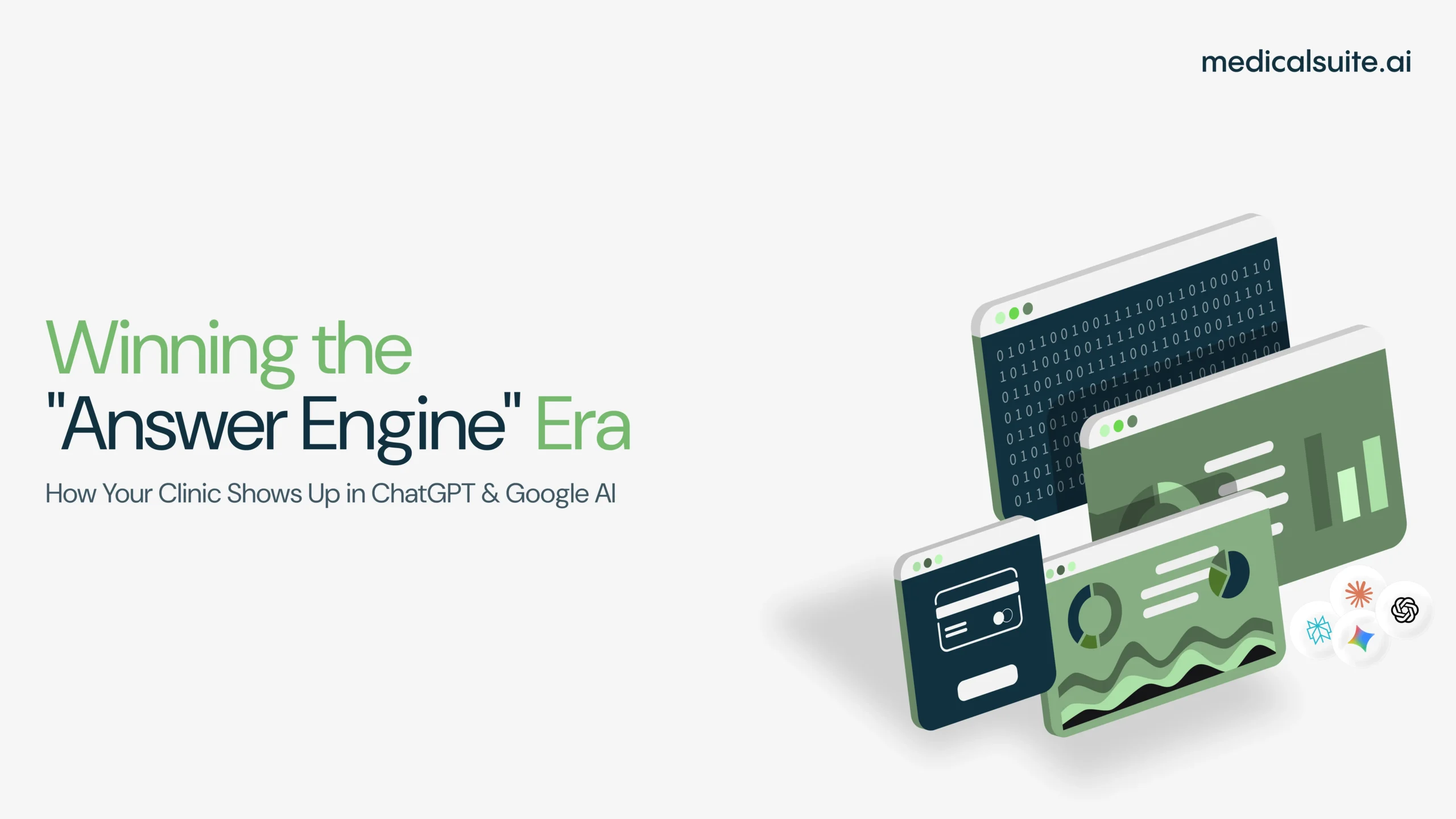
Now? Google leads with an AI-generated summary at the top of the page. ChatGPT skips the list entirely and just tells you the answer. Perplexity does the same. Even Bing has gotten in on it.
These tools aren’t searching for websites anymore; they’re synthesizing information and presenting conclusions. They’re acting like an answer engine, not a search engine. And they’re pulling from a very specific pool of sources they’ve decided to trust.
If your clinic isn’t in that pool, you don’t exist to those patients.
Harsh? A little. True? Completely.
Why This Hits Small Clinics Especially Hard
Big hospital systems have entire marketing departments, content teams, and PR firms behind them. Thousands of backlinks, hundreds of pages of content, and brand recognition that makes AI models default to mentioning them first.
Your clinic? You’re probably running on a website built four years ago, updating your Google Business Profile when you remember, and squeezing in marketing between patients.
Nobody warned you that one day you’d need to worry about whether an AI chatbot knows your clinic exists. But here’s the thing, this shift actually creates an opening for smaller practices. Answer engines don’t just favor the biggest names. They favor the most relevant, the most specific, and the most credible. A well-positioned GI clinic in Naperville can outrank a Chicago hospital system if the content is right.
That’s genuinely exciting.
How Answer Engines Actually Decide What to Surface
Here’s where it gets a little technical, but stick with me; it matters.
AI tools like ChatGPT and Google’s AI Overviews are trained on enormous amounts of text. They’re looking for sources that are consistent, credible, and specific. When a patient asks “what are the symptoms of Crohn’s disease” or “should I see a gastroenterologist for bloating,” the AI pulls from sources it already trusts on those topics.
So what makes your clinic trustworthy in the eyes of an answer engine?
Your website needs to actually answer questions, not just list your services. Real, useful answers in plain language. You need consistent information everywhere, same name, address, and phone number across your Google Business Profile, Healthgrades, Yelp, and beyond. You need credibility signals like reviews, staff bios, and credentials. And your content needs to go deep enough to signal genuine expertise, because that’s exactly what an answer engine is looking for.
Real Talk: What Patients Are Actually Asking AI
Let’s get specific. Here are the kinds of questions patients are typing into ChatGPT and Google AI right now, questions you should have answers to on your website:
- “Is it normal to have stomach pain every day?”
- “When should I see a doctor about acid reflux?”
- “What’s the difference between a gastroenterologist and a general doctor?”
- “How long does a colonoscopy take?”
- “Are there GI clinics that accept Medicaid near me?”
- “What foods should I avoid if I have IBS?”
If your website doesn’t have clear, well-written content addressing these questions, you’re invisible in the answer engine era. Meanwhile, the clinic down the street that invested in content, even a smaller, newer clinic, might be the one getting mentioned.
This isn’t hypothetical. We’ve seen it happen.
The Local Piece Matters More Than You Think
There’s a geographic layer to all of this that’s easy to overlook. When patients ask AI tools about clinics “near me” or in a specific city or suburb, those tools are pulling from local sources, your Google Business Profile, local directories, and location-specific content on your website.
A clinic in Schaumburg that has a page titled “GI Care in Schaumburg, IL” with actual useful content will consistently outperform a clinic that just has a generic “Contact Us” page with an address buried at the bottom.
Geo-specific content isn’t just an SEO tactic anymore. It’s how answer engines understand where you serve and who you serve. Think of it less like keyword stuffing and more like telling the AI exactly who you are and where you are. Clearly. Repeatedly. Helpfully.
One More Thing Nobody Talks About: Your Reviews
Patient reviews aren’t just for convincing hesitant patients to book, though they do that too. They’re also data points that answer engines use to assess how trustworthy and relevant your clinic is.
A clinic with 200 Google reviews averaging 4.8 stars, with patients mentioning specific conditions and positive experiences, sends very different signals than a clinic with 12 reviews from 2019.
Getting reviews should be an active, ongoing part of your patient experience, not something you hope happens on its own. Ask your patients. Make it easy. Send a follow-up text with a link. It makes a real difference, both in traditional search and in the answer engine world.
Okay, So What Do You Actually Do?
Here’s the honest version of the answer engine playbook for small clinics:
- Audit your website. Does it actually answer patient questions? Is it fast? Is it mobile-friendly? Does it make it easy to book an appointment?
- Claim and optimize every directory listing. Google Business Profile, Healthgrades, Zocdoc, Yelp, WebMD. All of it. Consistent info, photos, hours, services.
- Start creating content that answers real questions. Not fluff. Real, useful, specific content about the conditions you treat and the procedures you offer.
- Go local with your content. Write for your specific community, not just your specialty.
- Actively collect reviews. Build a simple system so it happens consistently.
- Think about structured data. This is a more technical one; it means tagging your website content so that AI tools can read and understand it more easily. Your web developer or a digital marketing partner can help with this.
None of these is an overnight win. But done consistently, they compound. And clinics that start now will have a meaningful advantage over the ones that wait.
The Bottom Line
The answer engine era isn’t coming; it’s here. Patients are already using AI tools to find clinics, ask health questions, and decide whom to trust with their care.
Your clinic can absolutely show up in those answers. It takes the right content, the right local presence, and the right technical foundation. But it’s very doable, even for a small, independent practice without a giant marketing budget.
You don’t have to figure it out alone, either. That’s exactly what we’re here for.
How MedicalSuite.ai Helps Clinics Win in the Answer Engine Era
We work with small clinics across the U.S. to build the kind of digital presence that actually gets found, by search engines, AI tools, and the patients who need you most. Here’s what we offer:
- Growth Consultation: Not sure where to start? We sit down with you, audit what you have, and build a clear roadmap. No jargon, no fluff, just a real plan tailored to your clinic’s goals and budget.
- SEO & AI Optimization: We optimize your website and content so you rank in traditional search and show up in AI-generated answers. This is the new frontier of medical SEO, and we know how to navigate it.
- Custom Websites: Your website should work as hard as you do. We build fast, beautiful, conversion-focused websites designed specifically for healthcare practices.
- HIPAA & ADA Compliant Websites: Compliance isn’t optional in healthcare. Every site we build meets HIPAA and ADA standards, so you’re protected and accessible, without sacrificing design or function.
- Content Marketing & Video Editing: Blogs, patient education content, social posts, explainer videos, we create content that builds trust, answers patient questions, and helps you get found in the answer engine era.
- PPC Ads: When you need patients now, paid ads deliver. We manage Google and Meta ad campaigns built specifically for healthcare, so your budget goes toward real results, not wasted clicks.
- Email Marketing: Stay top of mind with your existing patients and nurture new leads with email campaigns that feel personal, not spammy.
Ready to Show Up Where It Counts?
Your next patient is already asking an AI tool which clinic to visit. The only question is whether your name comes up.
Book a free growth strategy call with MedicalSuite.ai today, and let’s make sure it does.